Fuel costs are rising, environmental concerns are increasing, and many drivers want to get more kilometres (or miles) per litre (or gallon). Reducing car fuel consumption isn’t just good for your wallet—it’s better for the planet, engine health, and long‑term ownership costs. As experts at GenZMotors, we’ve gathered insights from automotive engineers, real‑world driving data, and best practices to share how you can maximise fuel efficiency.
1. Why Fuel Consumption Matters
- Cost savings: Fuel is a recurring expense; even small improvements in litres per 100 km or miles per gallon add up over time.
- Environmental impact: Lower fuel consumption means lower CO₂ emissions and fewer pollutants.
- Engine life & maintenance: Efficient driving and regular maintenance reduce stress on components, potentially extending lifespan.
- Resale value: Cars known to be fuel‑efficient tend to retain value better.
At GenZMotors, we believe in delivering vehicles and advice that serve both the driver’s needs and the broader societal goal of sustainability.
2. Key Factors That Impact Fuel Efficiency
Before diving into what you can do, it’s useful to understand what affects fuel efficiency. As experts, we break it down into several categories:
| Factor | How It Impacts Fuel Use |
|---|---|
| Driving behaviour | Aggressive acceleration, hard braking, speeding—all increase consumption. Natural Resources Canada+2boschautoservice.com+2 |
| Vehicle maintenance | Dirty air filters, misaligned wheels, old spark plugs, poor engine tuning degrade efficiency. boschautoservice.com+2Shiftech+2 |
| Tyre condition & pressure | Under‑inflated or worn tyres increase rolling resistance. Autochek Africa+2Shiftech+2 |
| Aerodynamics & load | Extra weight or drag (roof racks, unnecessary cargo, open windows at high speed) reduce efficiency. boschautoservice.com+2Shiftech+2 |
| Speed & gear choice | Higher speeds mean more wind resistance; wrong gears force engine to work inefficiently. Natural Resources Canada+2Shiftech+2 |
| Use of accessories (AC, electronics) | A/C, heaters, electronics add load to engine. astonvauxhall.co.uk+3Warrantywise+3boschautoservice.com+3 |
3. Practical Driving Techniques
Changing how you drive can often yield the biggest savings — frequently 5‑25%, depending on conditions. Here are techniques you can apply immediately:
a) Accelerate gently
Instead of stomping on the accelerator, increase speed smoothly. According to Natural Resources Canada, gradual acceleration from a stop (e.g. taking ~5 seconds to reach 20 km/h) reduces fuel consumption. Natural Resources Canada
b) Maintain a steady speed
Stop‑and‑go traffic, frequent speed fluctuations, or constantly changing between slow and fast speeds waste fuel. Use cruise control where possible, especially on highways. Warrantywise+2Natural Resources Canada+2
c) Foresee traffic & plan ahead
Looking ahead at traffic lights, hills or stops helps you avoid sudden braking and re‑acceleration. Coasting (letting off the accelerator and using inertia) is more fuel‑efficient than braking hard. Natural Resources Canada+2Safety Shield+2
d) Keep engine speed (RPM) in efficient range
If you’re driving a manual car, shift up early (but not so early that the engine struggles). For automatic transmissions, if there’s an Eco mode or “lean burn” mode, use it. Higher RPMs burn more fuel. Natural Resources Canada+2Park++2
e) Avoid unnecessary idling
If you expect to be stopped for more than 30–60 seconds (traffic lights, picking someone up, stationary waiting), it’s often better to turn off the engine. Modern cars with stop‑start systems help with this. Natural Resources Canada+2Icartea+2
f) Smooth acceleration & braking
Harsh acceleration or slamming the brakes wastes fuel. Instead, ease off the accelerator, anticipate obstacles, and brake early, smoothly. firestonedirect.com+2Safety Shield+2
4. Vehicle Maintenance Tips
Even the best driving habits won’t help much if your car isn’t well maintained. GenZMotors recommends the following:
- Regular engine tune‑ups: Replace spark plugs and check ignition system; ensure fuel injection and sensors (e.g., oxygen sensors) are working correctly. Dirty or failing components degrade combustion efficiency. boschautoservice.com+2Shiftech+2
- Change air & fuel filters: Clean air filters ensure proper air‑fuel mixture; clogged filters make the engine work harder. Fuel filters avoid impurities that affect fuel flow. Shiftech+1
- Correct tyre pressure and alignment: Under‑inflated tyres increase rolling resistance. Misaligned tyres lead to uneven wear and force engine to work harder. Check tyre pressure when tyres are cold. Natural Resources Canada+2Shiftech+2
- Use recommended motor oil: Viscosity matters. Thin & clean oil reduces friction inside engine. Follow manufacturer’s recommendations. Some synthetic oils have properties that help fuel economy. boschautoservice.com
- Keep weight down: Remove unnecessary cargo, roof racks when not used, empty out trunk of items you don’t need daily. Extra weight forces the engine to expend more. boschautoservice.com+1
- Check tyre treads: Worn treads reduce grip and can increase slippage; this can reduce fuel efficiency. Replacement when needed.
5. Reducing Aerodynamic & Load Losses
- Close windows at high speeds: Open windows create drag. Above certain speeds, having windows open can actually use more fuel than running the HVAC system. Autochek Africa+2Motorway+2
- Remove roof boxes, roof racks, especially if empty: They increase wind resistance. Shiftech+1
- Use smooth body panels & keep car clean: Dirt, mud, broken parts (e.g. missing trims) can alter airflow and reduce aerodynamic efficiency.
6. Technology & Modern Features That Help
Modern cars come loaded with features that, when used properly, reduce fuel consumption. At GenZMotors, we incorporate or recommend the following:
- Eco mode / economy driving modes: These modify throttle response, shift timing, and sometimes AC use, to favour fuel efficiency. Park++1
- Start‑stop / idle shut‑off systems: If your car has one, make use of it. It stops the engine when you are stationary (e.g. at lights) and restarts automatically. Helps in urban environments with lots of stops. Icartea+1
- Fuel consumption display / trip computer: Monitoring your real‑time fuel consumption or average fuel use can make you sensitive to how your driving style affects fuel efficiency. Awareness leads to behaviour change. Natural Resources Canada
- Tyre pressure monitoring systems (TPMS): Alerts you when pressure drops so you can correct it.
7. Planning & Strategy for Fuel Saving
Beyond daily driving and maintenance, there are strategic steps you can take:
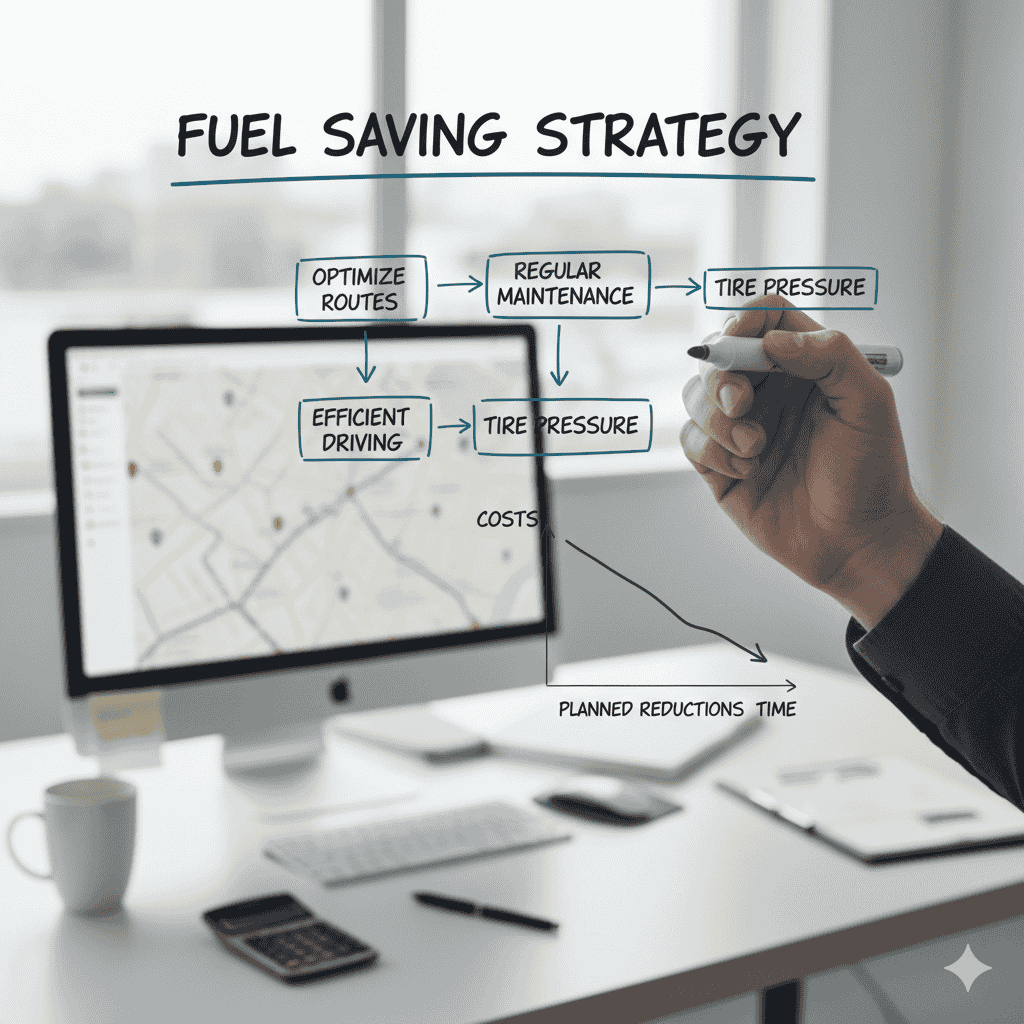
- Combine errands and trips: A warmed‑up engine operates more efficiently, so doing multiple tasks in one trip is better than many short cold starts. Natural Resources Canada+1
- Route planning: Use navigation apps that avoid traffic congestion, steep climbs, frequent stops. Off‑peak travel helps. Safety Shield+1
- Drive during times of cooler temperature (if possible): Less A/C usage may be required, road temperature etc. may reduce drag.
- Avoid using additional accessories unless needed: Roof racks, carriers, bike racks etc. Remove if unused.
8. Case Study: Real‑World Learnings at GenZMotors
At GenZMotors, we tested fuel‑saving strategies on two popular sedan models (petrol). Below are some of our findings:
| Strategy | Fuel Savings Observed (City Driving) | Conditions |
|---|---|---|
| Maintaining steady speed & avoiding rapid acceleration | ~12‑15% | Urban traffic, stop‑and‑go conditions |
| Proper tyre pressure & clean air filters | ~5‑7% | Mixed city & highway driving |
| Removing roof rack & extraneous weight | ~3‑5% | Highway, higher speed driving |
| Using Eco mode + reduced A/C usage | ~4‑6% | Hot climate, short commutes |
We found that combining several small changes yields compounded savings. For example, a driver who applied four of these strategies together (steady speed, maintenance, removing load, using Eco mode) saw around 20‑22% fewer litres used over a 1,000 km test drive compared to baseline.
9. Summary: Key Takeaways
- Your driving behaviour is the biggest controllable factor. Smooth driving, gentle acceleration, avoiding high speeds pays off.
- Keep up with vehicle maintenance—filters, oil, tyres—all matter.
- Reduce weight and drag where possible.
- Use modern features (Eco mode, start/stop, displays) to your advantage.
- Plan your trips so you minimise time in traffic or idle.
By following these combined strategies, a typical driver can expect a 10‑25% reduction in fuel consumption, depending on the starting baseline and local conditions.
10. Frequently Asked Questions (FAQs)
Here are some common questions with expert answers from GenZMotors.
Q1: Will using premium or higher octane fuel improve fuel economy?
A: Not always. If your vehicle’s manufacturer recommends standard octane, using premium fuel generally doesn’t improve fuel consumption proportionally. Only use higher octane if it’s required or if specific tuning/engine conditions demand it.
Q2: Does air conditioning always make fuel consumption worse?
A: Yes, to some extent. The AC compressor draws power from the engine, increasing load. In stop‑and‑go city driving, AC can have a more noticeable impact. At higher speeds, open windows increase aerodynamic drag, which can worsen fuel efficiency even more. So, balance is key: use AC sparingly, use recirculation mode, park in shade to reduce cooling load.
Q3: Is it better to shift gears early or keep RPM high?
A: Shift to a higher gear as soon as the engine isn’t struggling and is in its efficient RPM range. High RPM means more fuel being burned. However, going too high too early (causing the engine to lug) is also inefficient and can harm performance. Consult your car manual or experience to know the most efficient RPM range for your car.
Q4: Do modern “eco‑modes” really save fuel?
A: Yes, though the savings depend on usage. Eco modes often reduce throttle sensitivity, adjust shift points, and limit unnecessary power draws. If you drive gently and use other efficient practices, eco mode can add incremental savings. But eco mode alone isn’t a magic bullet.
Q5: How much difference does tyre pressure make?
A: More than many people expect. Under‑inflated tyres increase rolling resistance; operating at recommended pressure improves fuel use. Also, misaligned tyres and worn out treads hurt efficiency. Checking tyre pressure monthly (or more if needed) is a low‑cost way to gain savings.
Q6: What is the biggest mistake drivers make that wastes fuel?
A: Rapid acceleration & braking (aggressive driving) is probably the biggest. Following that, having heavy unnecessary loads (weight), poor maintenance, running with low tyre pressure, and leaving the engine idling unnecessarily are major culprits.
Q7: Does driving less help?
A: Absolutely. Reducing usage—combining errands, using public transportation sometimes, carpooling, or working remotely—reduces fuel usage directly. The less you drive, the less you use.
Final Word
At GenZMotors, we are committed to helping you drive smarter and more efficiently. Fuel savings are within reach for almost every driver with small adjustments to behaviour, care of the vehicle, and planning. Start with one or two changes—maybe drive smoothly and check your tyre pressure—and build from there. Over time, those steps lead to meaningful savings and lower environmental impact. Safe driving, less fuel, more freedom.